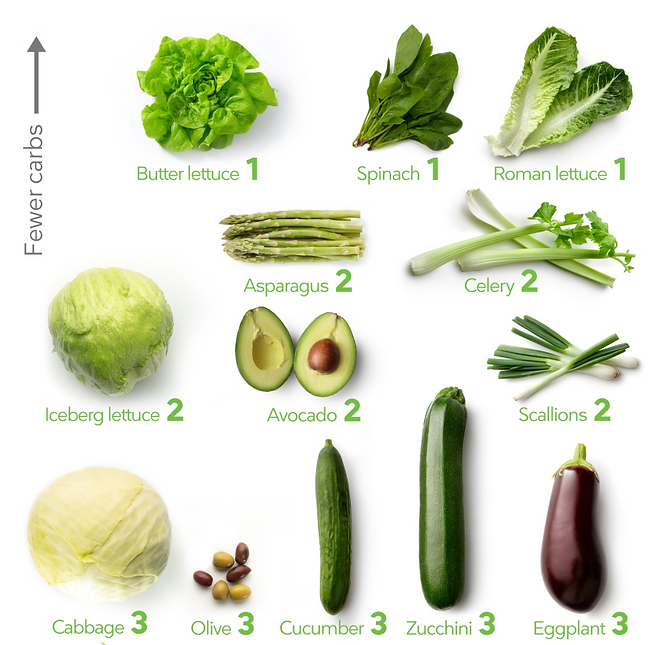
Keto Vegetables: Eat More vs. Eat Less
Visual Tools
Not all vegetables have the same carbohydrate content. When following a ketogenic or low-carbohydrate diet, focus on non-starchy, nutrient-dense vegetables while limiting higher-carb and starchy choices. Use this guide to help you choose vegetables that support stable blood sugar, metabolic health, and ketosis.
What Are the Best Vegetables for a Keto Diet?
When following a ketogenic or low-carbohydrate diet, vegetables can still provide important fiber, vitamins, minerals, and phytonutrients. The key is choosing mostly non-starchy vegetables that provide plenty of nutrition without adding a large carbohydrate load.
-
Choose more often: Leafy greens, broccoli, cauliflower, zucchini, cabbage, asparagus, cucumber, mushrooms, and green beans.
-
A helpful rule of thumb: Look for vegetables containing approximately 5 grams or less of net carbohydrates per 100 grams.
-
Enjoy in smaller portions: Carrots, onions, tomatoes, bell peppers, Brussels sprouts, rutabaga, and beets contain more carbohydrates but can still fit into a keto diet depending on portion size.
-
Limit on strict keto: Potatoes, sweet potatoes, parsnips, corn, and most beans and legumes are much higher in carbohydrates and can make maintaining ketosis more difficult.
-
Keep the whole day in mind: A strict ketogenic diet often limits net carbohydrates to around 20 grams per day, although the appropriate amount varies by person and health goals.
Remember: You don't necessarily need to avoid higher-carb vegetables completely. Portion size matters, and your overall carbohydrate intake is more important than any single food.
Dr. Graff’s 10 Favorite Keto Vegetables
-
Spinach — ~1 g net carbs
One of the lowest-carb vegetables available. Enjoy spinach raw in salads, sautéed with olive oil or butter, added to eggs, soups, or blended into smoothies.
-
Avocado — ~2 g net carbs
Technically a fruit, avocado earns a place on this list because it is rich in fiber, potassium, and monounsaturated fats. Add it to salads, eggs, bowls, or make fresh guacamole.
-
Asparagus — ~2 g net carbs
A nutrient-dense, fiber-rich choice that works well roasted, grilled, steamed, or sautéed. Pair it with olive oil, butter, herbs, or a creamy sauce.
-
Cauliflower — ~3 g net carbs
One of the most versatile keto vegetables. Cauliflower can replace higher-carb foods and be transformed into cauliflower rice, mash, roasted florets, pizza crust, or even soup.
-
Cabbage — ~3 g net carbs
Affordable, filling, and incredibly versatile. Enjoy cabbage raw in slaws, sautéed, roasted, fermented as sauerkraut, or incorporated into stir-fries and soups.
-
Zucchini — ~3 g net carbs
A great substitute for traditional pasta or other starchy sides. Spiralize it into zucchini noodles, roast it, grill it, or make zucchini fries or chips.
-
Kale — ~3 g net carbs
Packed with vitamins, minerals, fiber, and phytonutrients. Kale works well in salads, soups, sautés, smoothies, or baked into crispy kale chips.
-
Broccoli — ~4 g net carbs
A nutrient-rich cruciferous vegetable that provides fiber and beneficial plant compounds. Steam, roast, sauté, or serve it with healthy fats such as extra-virgin olive oil, butter, or cheese.
-
Green Beans — ~4 g net carbs
A slightly sweeter but still keto-friendly option when portions are appropriate. Try them steamed, roasted, sautéed with garlic, or cooked with butter or olive oil.
-
Brussels Sprouts — ~5 g net carbs
Higher in carbohydrates than some leafy vegetables, but still suitable for many low-carb diets. Roasting them until browned and crispy brings out their natural flavor.